Workday Talent and Performance Management Training
Workday Talent and performance management
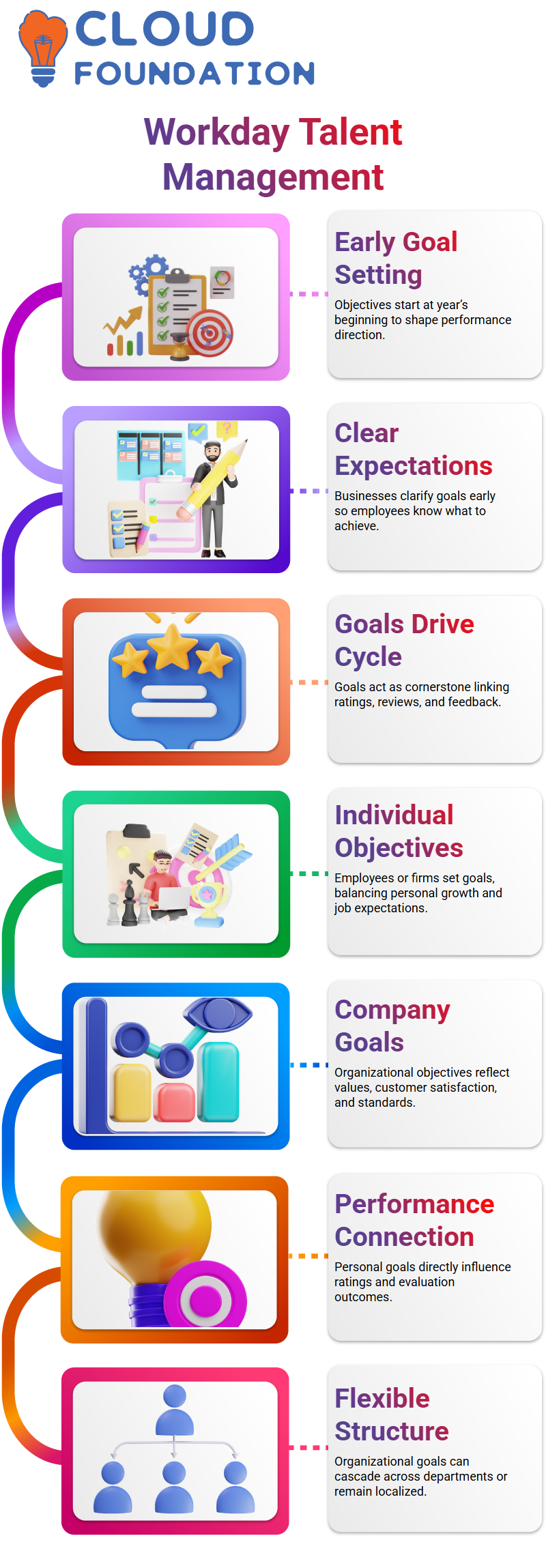
When I speak about objectives, I usually start at the beginning of the year since that is when everything actually takes shape in Workday Talent and performance management.
I have noticed again and again that businesses like to clarify expectations early, so people know precisely what they are working toward.
Goals in Workday Talent and performance management are organised and in line with how performance will be assessed in the future; they are not arbitrary chores.
Goals are treated as the cornerstone of the whole performance cycle by Workday Talent and performance management, in my experience.
Once objectives are determined, every conversation surrounding ratings, comments, and reviews links back to those goals.
That is why I constantly highlight knowing how Workday Talent and performance management handle objectives starting from day one.
Individual goals explained with Workday Talent and performance management
In Workday Talent and performance management, specific objectives might originate from the employee or directly from the firm.
It is a common misconception that workers always set their own objectives.
Workday Talent and performance management enable managers and organizations to establish objectives based on job expectations.
In Workday Talent and performance management, I often discuss two categories of personal objectives.
The first kind functions as a goal, where the corporation explicitly outlines what it wants from you.
The second category is more elective, something you pick for your own progress.
However, with Workday Talent and performance management, the company-assigned objectives have the greatest weight during performance evaluations.
How Workday Talent and performance management use these objectives throughout review is what I think is crucial.
The system determines whether you fulfilled the requirements set at the beginning of the year.
Based on it, ratings and grades are established. For this reason, I usually explain to Learners how Workday Talent and performance management directly connect personal objectives to performance results.
Organisation goals inside Workday Talent and performance management
Organisation objectives are another crucial topic I concentrate on while teaching Workday Talent and performance management.
These objectives frequently stay constant across teams since they represent business values and priorities. In Workday Talent and performance management, company objectives generally include behavior standards, customer satisfaction, and core values.
I want to present genuine examples when I speak about Workday Talent and performance management.
If you assist clients, your objectives can center on customer satisfaction ratings or response times.
If you work in sales, objectives may match with targets and revenue. Workday Talent and Performance Management modifies organizational goals according to responsibilities while maintaining alignment with overarching business objectives.
The ability to create organizational objectives at various levels is one aspect of Workday Talent and performance management that I particularly like.
You may define them at the top level and let them trickle down, or you can limit them to a certain department. This flexibility makes Workday Talent and performance management realistic for big and complicated businesses.
Reviewing and tracking goals in Workday Talent and performance management
If you have the necessary access, you may plainly view individual objectives, organizational goals, and even archival goals.
In Workday Talent and performance management, archived objectives allow you to review past accomplishments.
From my opinion, openness is one of the merits of Workday Talent and performance management. It’s easy to determine which objectives are ongoing and which have already been accomplished. This visibility helps workers remain engaged, and supervisors measure progress without misunderstanding.
In Workday Talent and performance management, I always tell Learners that access is important. Depending on your function, such as talent admin or manager, you may view various areas.
The fundamental concept is still the same, though: Workday Talent and performance management maintain objectives’ structure and ease of evaluation.
Performance reviews by Workday Talent and performance management
When the financial year finishes, performance evaluations commence, and here is where Workday Talent and performance management really come alive.
I explain that the review cycle normally begins when administrators initiate the procedure. Employee duties are then automatically triggered by Workday Talent and performance management.
One thing I really appreciate about Workday Talent and performance management is self-evaluation.
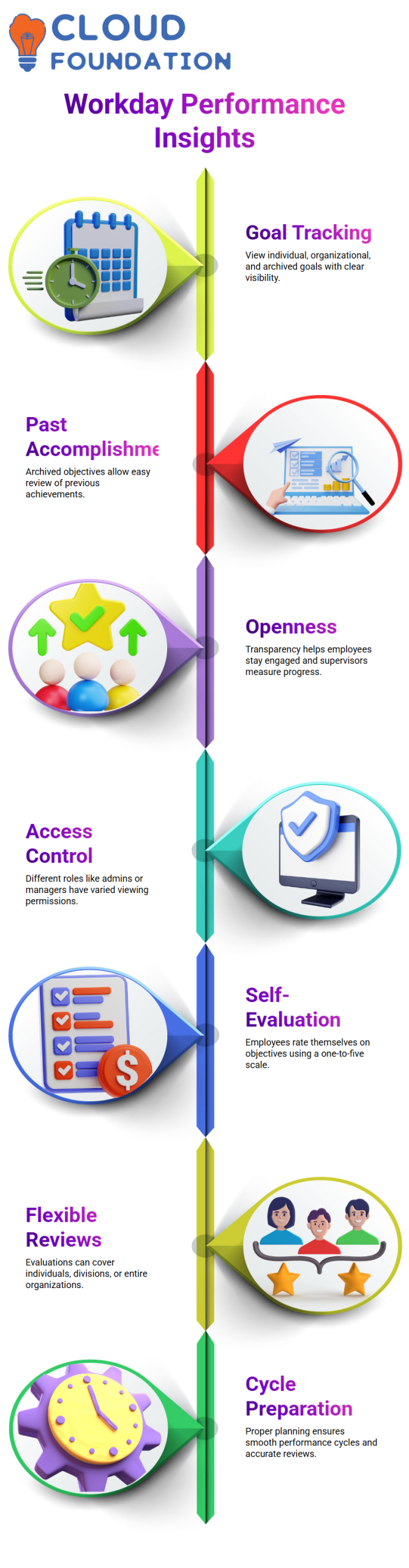
Employees grade themselves depending on the objectives outlined before.
The rating system, commonly from one to five, helps arrange input. Workday Talent and performance management guarantee that self-ratings tie directly to goal attainment.
After self-evaluation, management come in, and the examination continues.
I constantly inform learners that Workday Talent and performance management enable numerous review situations.
You may undertake evaluations for individual areas, divisions, or the whole company. This flexibility makes Workday Talent and performance management a great tool for addressing performance at scale.

Workday Talent and Performance Management Training

Workday Talent and performance management in real performance cycles
Performance cycles are often the first question I get when I work with organizations on Workday Talent and performance management.
People want to know who may be involved, when the cycle can be opened, and if it can be confined to particular groups.
In my experience with Workday Talent and performance management, flexibility exists, but it relies on how intelligently the cycle is structured at the outset.
I typically explain that under Workday Talent and performance management, a performance cycle may be begun for all workers or for a specific demographic.
If you determine early that just a certain job level or group should participate, you may set that.
Workday Talent and performance management do not permit significant adjustments without careful administrative intervention after the cycle has been locked and closed.
For this reason, I usually stress the need of preparation before launch. With Workday Talent and performance management, choices made at initiation effect everything that follows, from self-evaluations to manager reviews.
How Workday Talent and performance management handle changes after cycle closure
In Workday Talent and performance management, I often see a manager discovering a rating error after submission. Supervisors often ask me if they may restart the review for a small group or just for themselves.
In Workday Talent and performance management, restarting a complete cycle for everyone is not realistic after it is closed.
Transaction-level control is what I typically walk them through in Workday Talent and performance management. Administrators have the option to cancel or resubmit such transactions if reviews are still ongoing.
Workday Talent and performance management demand a more regulated approach if evaluations are already finished, which often entails returning the review at the individual level.
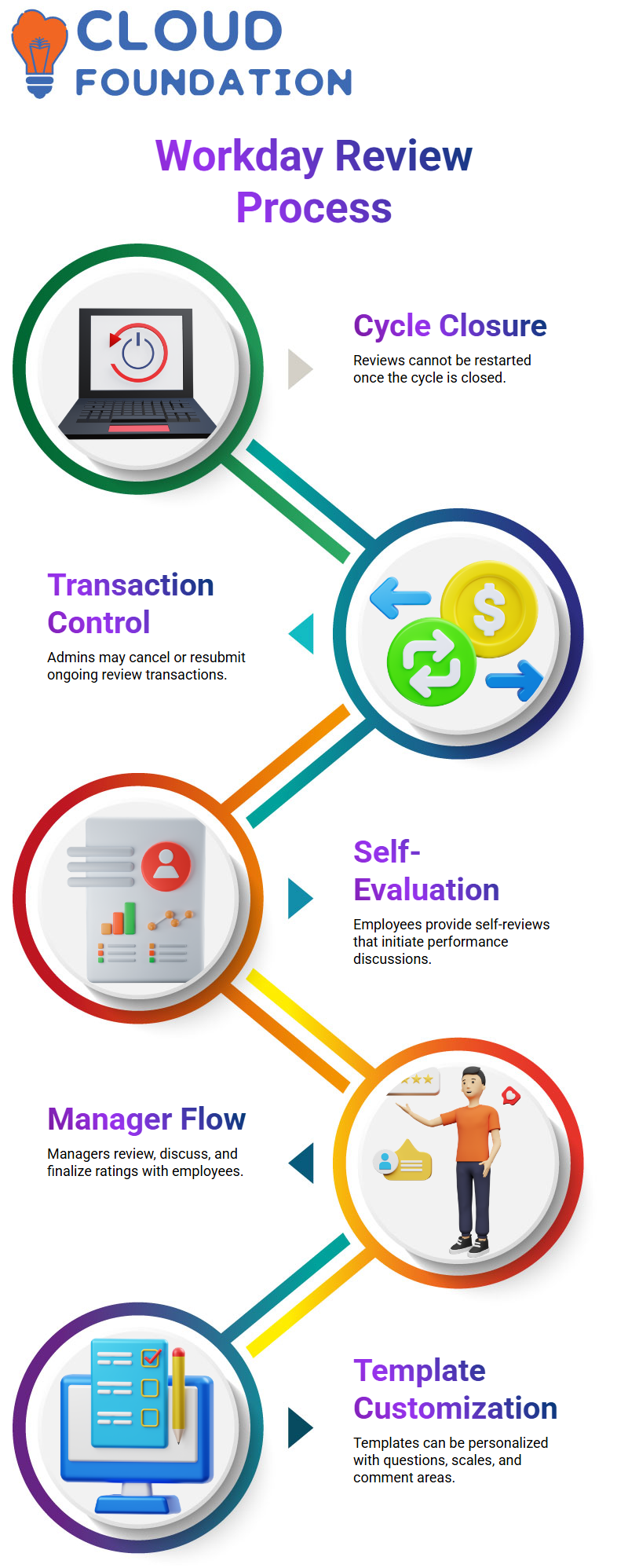
From my opinion, Workday Talent and performance management enhance accountability. A manager may change a rating for one employee, but reopening ratings across all work levels is purposely prohibited.
Employee and manager flow in Workday Talent and performance management
Allow me to explain the general workflow of Workday Talent and performance management. Once the performance cycle begins, the system provides the review to the employee first.
In Workday Talent and performance management, self-evaluation is a vital stage since it creates the platform for dialog.
After the employee provides their self-review, Workday Talent and performance management route it to the manager.
This is where real conversations happen. I constantly urge managers to utilize Workday Talent and performance management as a conversation tool, not simply a rating form.
In many businesses adopting Workday Talent and performance management, managers have one-on-one meetings to assess ratings, clarify gaps, and align expectations.
The manager then finalizes the rating, which may go higher up the hierarchy depending on the setup.
Templates and configuration in Workday Talent and performance management
As a consultant, one of my primary tasks is setting templates in Workday Talent and performance management. These templates govern what workers see, what supervisors see, and how feedback is recorded.
Workday Talent and performance management provide considerable personalization at this level.
I can customize Workday Talent and performance management templates with numerous questions, competences, and rating scales.
I typically enforce comment areas so workers explain why they scored themselves a specific way.
This makes Workday Talent and performance management more relevant and less mechanical.
What I truly enjoy about Workday Talent and performance management is control.
I may limit or expose fields, demand reasons, and match the template with business objectives. Every feature of Workday Talent and performance management enables systematic and fair reviews.
Business process timelines in Workday Talent and performance management
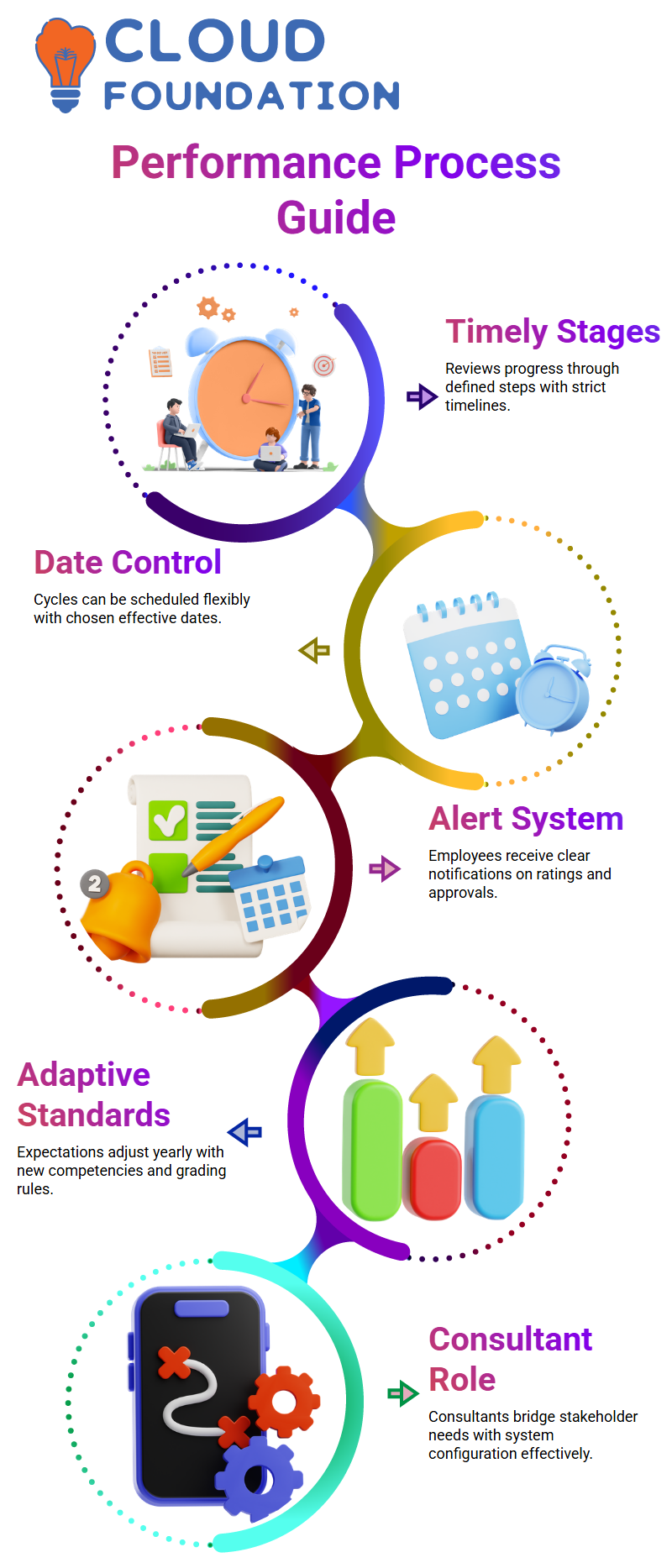
Timelines play a key part in Workday Talent and performance management. When I conduct a performance evaluation, I always consider about effective dates and completion timelines.
I may start a cycle now and make it effective at a later time thanks to Workday Talent and Performance Management.
Each stage in Workday Talent and performance management, from self-review to final validation, has a set timetable. Employees are notified about final ratings and approvals via notifications.
This openness is one of the main characteristics of Workday Talent and performance management.
Before every cycle, I collect requirements since performance expectations alter every year.
Workday Talent and performance management adjusts readily to such changes, whether they relate to competences, grading scales, or visibility standards.
Organizations depend so heavily on Workday Talent and performance management because of this flexibility.

Workday Talent and Performance Management Online Training
Workday Talent and performance management from a consultant perspective
When I work with Workday Talent and performance management, the first thing I always establish is expectations.
I am never asked by business users where a task is located in the backend or how to click buttons.
They concentrate on results. They tell me what they anticipate from Workday Talent and performance management, and I convert that expectation into system configuration.
In my day-to-day position with Workday Talent and performance management, I operate as the bridge between needs and configuration.
Stakeholders express how they want the performance assessment to appear, who should be involved, and what should change from last year.
I take that feedback and go back into Workday Talent and performance management to make the modifications.
I seldom start from scratch since the majority of organizations already utilize Workday Talent and performance management.
There is often an established template for performance reviews.
My duty is to examine it, determine what worked and what did not, and alter the configuration within Workday Talent and performance management without disturbing the business process.
Performance review templates in Workday Talent and performance management
One of the most significant things I discuss when dealing with Workday Talent and performance management is how performance review templates act.
Several performance review templates may be made according to various job categories, geographical areas, or employee groupings.
Workday Talent and performance management offers such flexibility, and organizations employ it significantly.
However, there are stringent restrictions on Workday Talent and performance management.
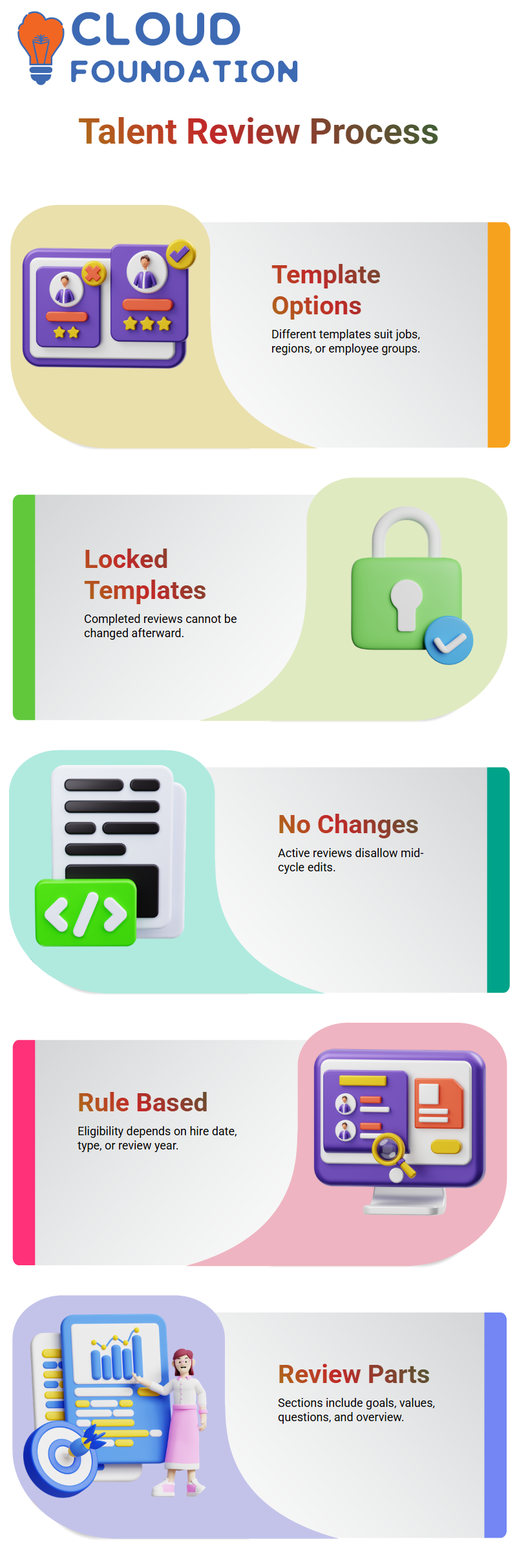
Once a performance review template is utilized and an employee completes a review, the system locks that template.
I cannot alter it anymore. This guideline in Workday Talent and performance management shocks many individuals, therefore I usually call it out early.
When stakeholders ask for adjustments after a review is already in process, I explain that Workday Talent and performance management do not enable mid-cycle alterations.
If the template is active, the only alternative is to cancel the procedure totally and start over. This is why planning and testing in Workday Talent and performance management matters so much.
Eligibility rules and sections in Workday Talent and performance management
Eligibility restrictions are another area where Workday Talent and performance management play a large influence.
Each performance evaluation may apply solely to certain personnel. For example, I regularly define rules in Workday Talent and performance management depending on hiring date, employee type, or review year.
Inside Workday Talent and performance management, each performance review template normally has numerous parts. Goals, values, questions, and an overview are typical parts.
I carefully go over each area to ensure that it is in line with the organization’s performance metrics.
In the objectives area of Workday Talent and performance management, I determine who may comment and whether comments are obligatory.
I also select whether to utilize a rating scale. Some firms opt not to grade people at all, and Workday Talent and performance management supports that strategy without any difficulty.

Workday Talent and Performance Management Course Price

Vanitha
Author
The capacity to learn is a gift; the ability to learn is a skill; the willingness to learn is a choice