SAP CPQ Online Training Course
Subscription Business Models with SAP CPQ
I usually start by considering long-term value, client flexibility, and recurring income while designing solutions in SAP CPQ.
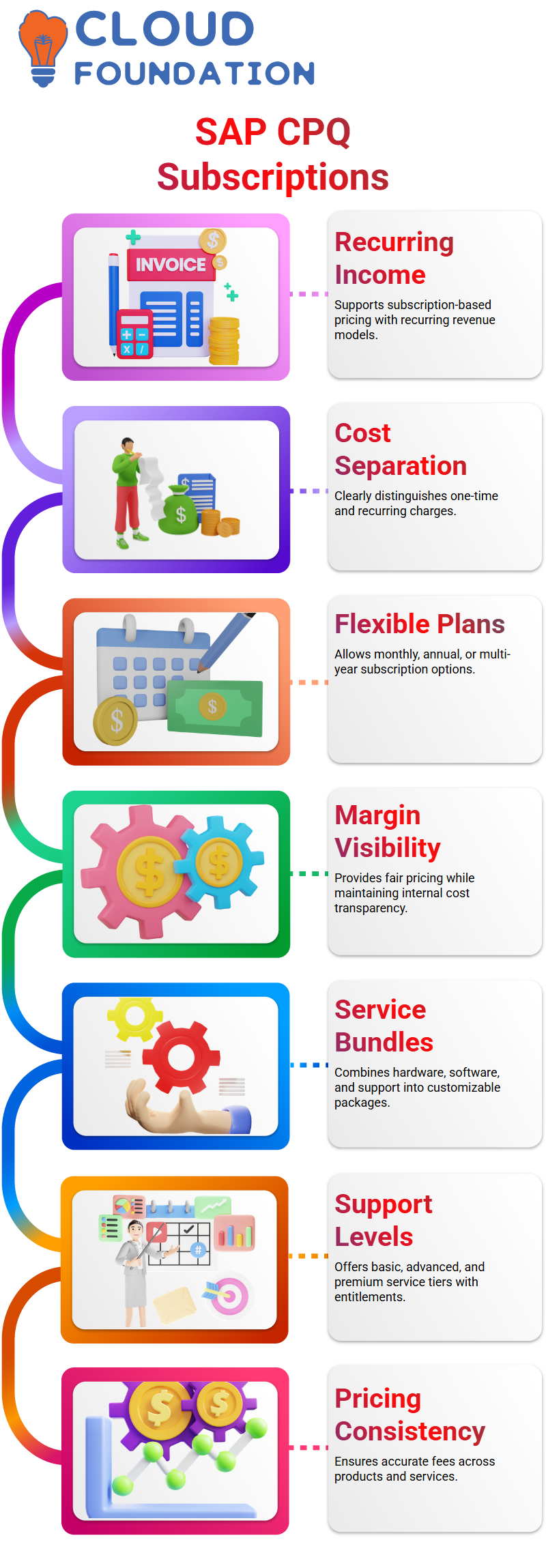
I can cleanly and scalably represent one-time charges, recurring charges, and subscription logic with the help of SAP CPQ.
I often use straightforward, real-world examples to illustrate subscription principles in SAP CPQ. Consider a cable television subscription. A monthly membership charge is in addition to the original installation cost. I can easily depict both of these, compute margins, and provide clients with fair pricing while maintaining internal cost visibility thanks to SAP CPQ.
The best thing about SAP CPQ, in my opinion, is how easily it accommodates various subscription lengths. SAP CPQ enables me to set up the customer’s preferred plan type—monthly, annual, two-year, or three-year in accordance with company regulations.
Configuring One-Time and Recurring Costs in SAP CPQ
When I work in SAP CPQ, I clearly separate non-recurring costs and recurring costs. In SAP CPQ terminology, this usually translates into NRC and MRC models. For example, I might configure a one-time installation fee of $40 and a recurring monthly fee of $10 directly inside SAP CPQ.
SAP CPQ helps me explain this clearly to customers. If a customer only wants a one-time installation with no ongoing maintenance, I configure that as a pure NRC scenario in SAP CPQ. The product gets installed, ownership transfers to the customer, and no recurring service applies.
On the other hand, when customers want monthly maintenance, software upgrades, or ongoing support, SAP CPQ makes it easy to attach MRC pricing.
I can bundle services, apply discounts, use multipliers, and still keep pricing logic consistent across products in SAP CPQ.
SAP CPQ for Bundles, Services, and Support Models
Product bundling is a strong feature in SAP CPQ that I often use. Customers rarely purchase a single item in real commercial settings. They want support, software, and hardware all at once. I can combine all of them into a single, customizable product thanks to SAP CPQ.
One significant source of income is support and services, which SAP CPQ excels at managing. Support may be set up as a stand-alone item or as a component of a package. I often develop service levels in SAP CPQ, such as basic, advanced, and premium, each with unique entitlement guidelines and prices.
SAP CPQ ensures that the appropriate service fees are automatically applied when clients request software updates, upgrades, or replacements. This maintains accuracy and consistency throughout the quotation lifecycle while simplifying the sales process.
Real-World B2B Subscription Scenarios with SAP CPQ
In one of my prior deployments, I collaborated closely with a media-based business-to-business organization, and SAP CPQ was crucial. Instead of supplying end customers, these companies sell IPTV software, content management systems, and hardware to other businesses.
I used SAP CPQ to create complex product portfolios that included physical setup boxes, perpetual software licenses, subscription-based software, and goods connected to logistics. Thanks to SAP CPQ, I was able to manage all of these variations without putting too much strain on the sales team.
The options available to consumers were device-only purchases, software-only subscriptions, and fully bundled items. SAP CPQ, I was able to precisely model each option, ensuring that pricing, margins, and discounts were always calculated correctly.
Scaling Cloud and SaaS Models SAP CPQ
Since everything is moving to the cloud, SAP CPQ is becoming more and more crucial. SAP CPQ, I assist with cloud installs of centrally hosted software that is sold as a subscription. This is very compatible with modern SaaS business models.
I can set up basic subscriptions, premium upgrades, and paid extras for corporate software suites, email storage subscriptions, and productivity tools SAP CPQ. Customers have well-defined options, and businesses get consistent, recurring revenue.
When I prepare SAP CPQ for training environments or real installations, I also focus on administrative setup. SAP CPQ’s straightforward setup, transparent subscription policies, and flexible price structures ensure that the syste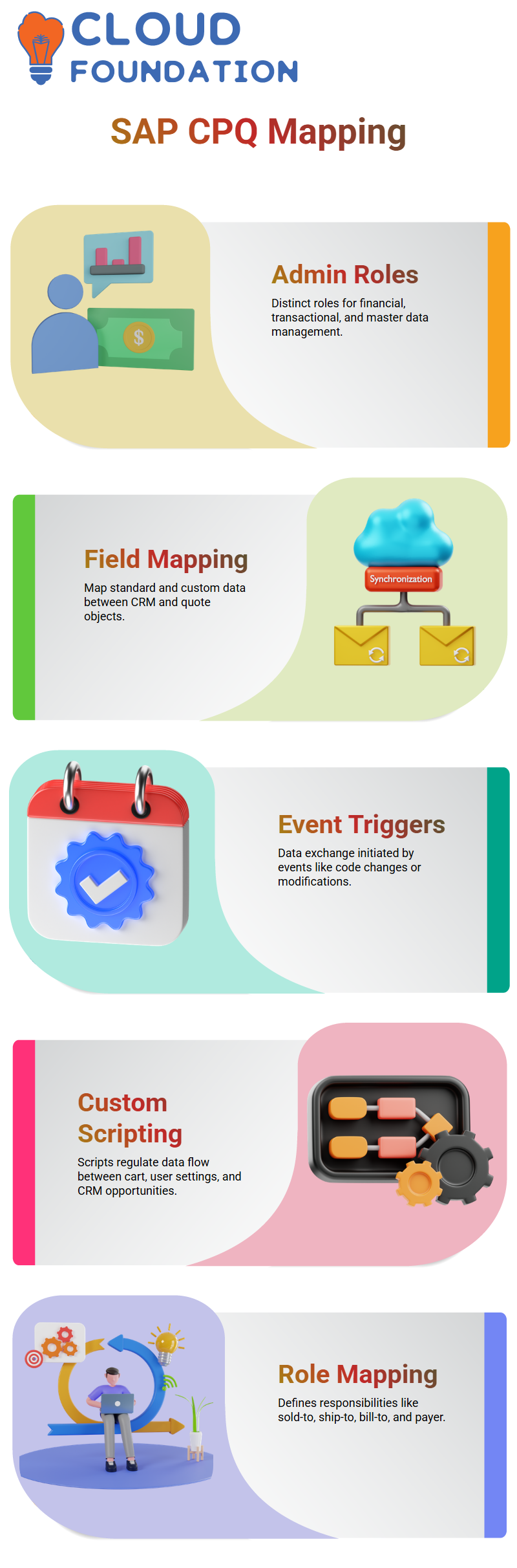 m supports long-term business growth with ease.

SAP CPQ Training

Getting Started with SAP CPQ Application Parameters
Setting the appropriate application settings is the first thing I concentrate on when I first start working with SAP CPQ.
These factors determine the pricing engine’s future flexibility and power in SAP CPQ. I usually choose the recurring price and cost option after going to the general settings. For real-world subscription models, this one SAP CPQ step opens multipliers, recurring pricing, and recurring costing.
In SAP CPQ, I consider this to be an administrative task that is required. I am unable to set up price logic correctly if these options are not enabled. I can work with both one-time and recurring numbers with confidence after I set the parameter to true in SAP CPQ, which provides me with a solid basis for everything that comes after.
Managing Discounts and Multipliers in SAP CPQ
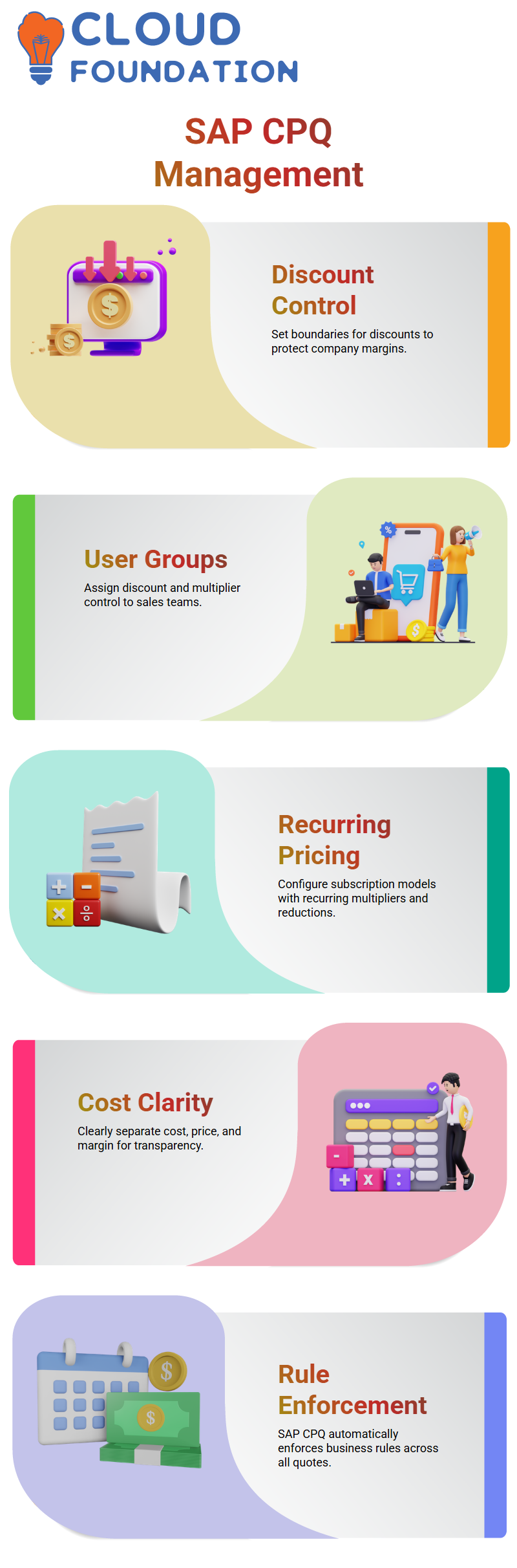
I go directly to SAP CPQ’s pricing and computations area after setting up the main settings. I control and activate multipliers and discounts here. I always specify which user group in SAP CPQ has the ability to modify these variables, and I often give the sales staff this task.
Sales users want restricted flexibility in SAP CPQ.
I permit them to use multipliers and discounts, but only within certain parameters. This approach ensures that SAP CPQ protects company margins while still empowering sales teams to negotiate effectively. I like how apparent SAP CPQ makes this balance.
=On the configuration screen in SAP CPQ, I set minimum and maximum values. For instance, I may permit a 3% minimum and a 10% maximum discount. Sales cannot exceed what the company permits since SAP CPQ automatically enforces these boundaries. In order to maintain subscription-based pricing over time, I also set up recurring multipliers and recurring reductions in SAP CPQ.
Configuring Recurring Pricing Models SAP CPQ
I often use a straightforward and familiar example, such as an email account service, to illustrate recurring pricing in SAP CPQ. I specify a basic offering with a certain quantity of free storage in SAP CPQ. SAP CPQ automatically determines costs depending on use after the client surpasses that limit.
In SAP CPQ, I create a new product and configure it as a service product that may be customised. I save time and prevent mistakes by having SAP CPQ create the system ID for me. I proceed to the price page after choosing services as the product category.
I choose custom pricing in SAP CPQ and provide a base price and a recurring price. In SAP CPQ, I also use price formulae anytime I want unique logic.
I provide one-time and ongoing expenses in detail so that SAP CPQ can compute margins precisely. SAP CPQ’s level of information keeps the finance and sales departments in sync.
Cost, Margin, and Control in SAP CPQ
The clarity with which SAP CPQ distinguishes between cost, pricing, and margin is one feature that I really value.
I first determine the true cost of providing a service in SAP CPQ, and then I construct pricing around that cost. In this manner, SAP CPQ consistently displays the margin that the business generates.
For instance, I set up a $40 service delivery fee in SAP CPQ and then permit a small range of discounts. Sales can provide flexibility without compromising profits thanks to SAP CPQ. To automatically enforce these business rules, I depend on SAP CPQ.
Managers are reassured by this SAP CPQ configuration. They are aware that all quotes produced by SAP CPQ, whether they include one-time fees or ongoing subscriptions, adhere to the same business logic.
Attributes and Storage Options in SAP CPQ
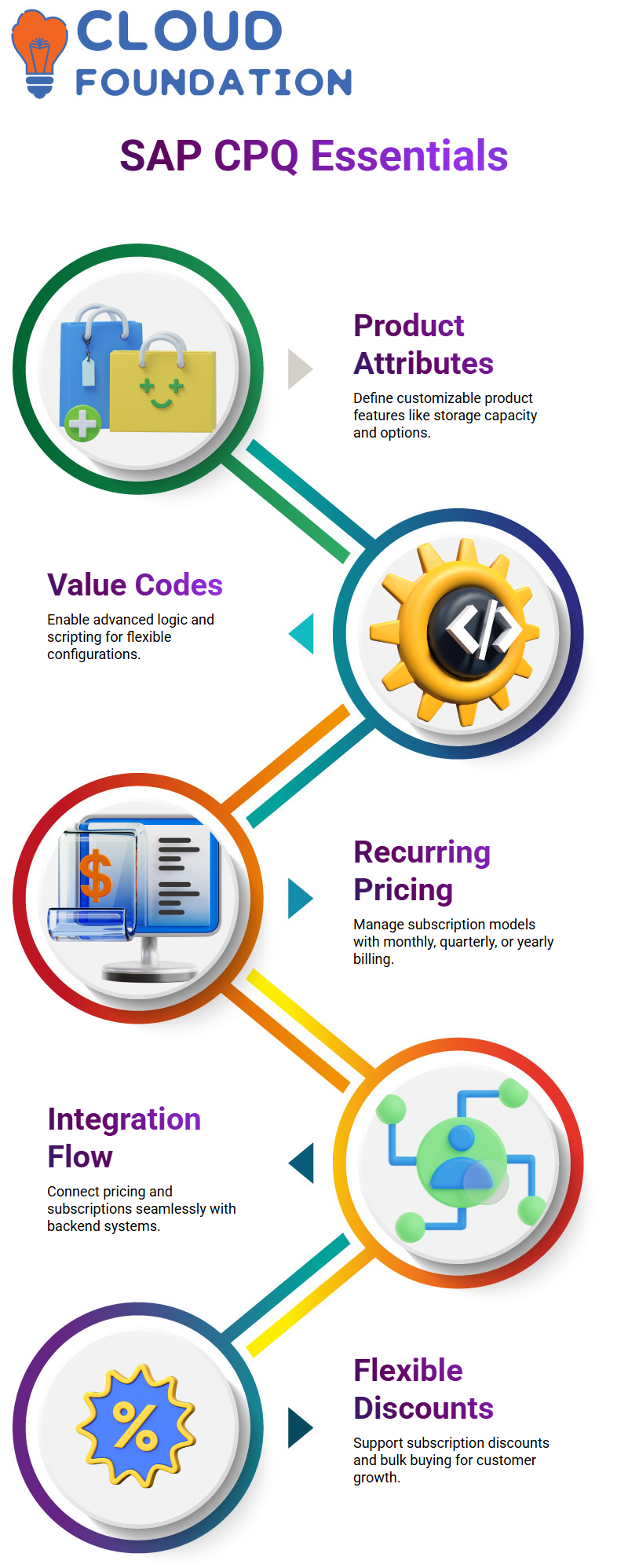
In SAP CPQ, attributes are crucial to my product design process. I create a property named storage space for the example email account.
I can provide many alternatives under a single product in SAP CPQ thanks to characteristics, which eliminates the need for distinct SKUs.
In SAP CPQ, I specify numbers such as 5 GB, 50 GB, 200 GB, 500 GB, and more. IDs are generated automatically by the system, and I can add value codes for sophisticated logic or scripting. To help clients comprehend their options, SAP CPQ makes it simple to rate these values from lowest to greatest.
This is where subscription-based business models are really supported by SAP CPQ. SAP CPQ enables me to bill clients according to consumption, either as a one-time upgrade or as a regular cost, much like other well-known cloud services.
After that, I give the product the storage attribute, manage its presentation, and let SAP CPQ take care of the rest when it comes to quoting.

SAP CPQ Online Training
Mastering SAP CPQ: Configuring Products for Recurring Revenue Models
SAP CPQ (Configure, Price, Quote) is essential for streamlining the pricing and configuration of complicated goods in the realm of sales and subscription-based services.
Knowing how SAP CPQ aids in pricing and configuration management is crucial as companies move toward recurring revenue models. Let’s examine SAP CPQ’s functionality and how you may utilize it to optimize your product line.
Consider yourself setting up a storage strategy for a client. You may quickly create various attribute values, such as storage capacity, price choices, and recurring expenses, SAP CPQ. For example, because 5GB of storage is included in the basic offering, it may be free for customers who choose it.
However, the cost will go up if they decide to add additional storage. Setting up this sort of setting and making sure the price matches consumer preferences are made possible by SAP CPQ.
You may control your customizable goods’ one-time and recurring pricing in SAP CPQ.
Assume that you provide storage plans with levels of 50GB, 200GB, and even 500GB. Each choice may have different prices, which SAP CPQ allows you to easily handle. The platform makes sure that the price structure reflects the continuous usage of the service by allowing recurring expenses depending on the storage option that the client has chosen.
In SAP CPQ, required characteristics may also be defined. For instance, the buyer may be compelled to choose the basic version of a product because it may be pre-selected for them.
This implies that unless the consumer chooses to upgrade, they will be automatically paid based on their basic storage. Throughout the client experience, SAP CPQ’s flexibility guarantees that all pricing and characteristics are transparent and consistent.
SAP CPQ’s strength extends beyond simple product setups. It also applies to real-world situations where the goods could be intricate packages or a component of a larger service package. Subscription-based solutions are becoming more and more common in businesses today, both for software and tangible commodities.
SAP CPQ facilitates the efficient management of recurring pricing models, regardless of whether you are selling software-as-a-service (SaaS) or a subscription for a tangible product such as home goods or cosmetics.
Actually, handling recurring subscriptions is one area where SAP CPQ excels. Businesses are increasingly recurring billing as they shift away from one-time transactions. You may create subscription plans with SAP CPQ that will automatically renew on a monthly, quarterly, or yearly basis.
For instance, depending on their storage requirements, a client may get monthly bills for email storage plans.
As the customer’s needs vary, SAP CPQ will automatically determine and modify the recurring charges.
Businesses can manage their price structures and subscriptions in real-time thanks to SAP CPQ’s seamless integration with backend systems like SAP ECC, which extends beyond product settings. After a consumer chooses an option, SAP CPQ determines the cost and sends the data to the backend system for further handling.
Your pricing models, customer accounts, and sales staff will all be connected thanks to this connectivity.In addition to becoming a trend in software, subscription-based pricing is also gaining traction in retail and e-commerce. Subscription models have been adopted by websites like Amazon and Flipkart, which regularly send goods like makeup, household necessities, and more.
Customers who subscribe to regular delivery on these sites often get cheaper pricing. Businesses may use SAP CPQ to replicate these models and provide their clients with recurring pricing, which streamlines and improves the process.
SAP CPQ will become increasingly more important in controlling pricing, customising goods, and expediting the sales process as companies continue to adopt subscription models. Businesses may guarantee that their clients always get the correct goods at the appropriate price by SAP CPQ.
Quotation Flow SAP CPQ
For instance, SAP CPQ instantly responds by determining costs based on configuration rules when I choose a quantity, such as 500 licenses. Since it clearly explains the price mechanism, I particularly like demonstrating how SAP CPQ handles factors like storage capacity or feature choices.
List pricing is clear in SAP CPQ. I can plainly distinguish between monthly recurring costs and non-recurring charges. One of the reasons I like teaching SAP CPQ is its clarity. Learners immediately grasp how subscription-based pricing works in actual business situations when I display NRC and MRC side by side in SAP CPQ.
Subscription discounts and bulk buying are also supported by SAP CPQ. I often point out how industry developments, particularly in SaaS models, are reflected in SAP CPQ. I use SAP CPQ to show how businesses may expand by providing flexible pricing without sacrificing margin management.
Managing Discounts and Pricing Control in SAP CPQ
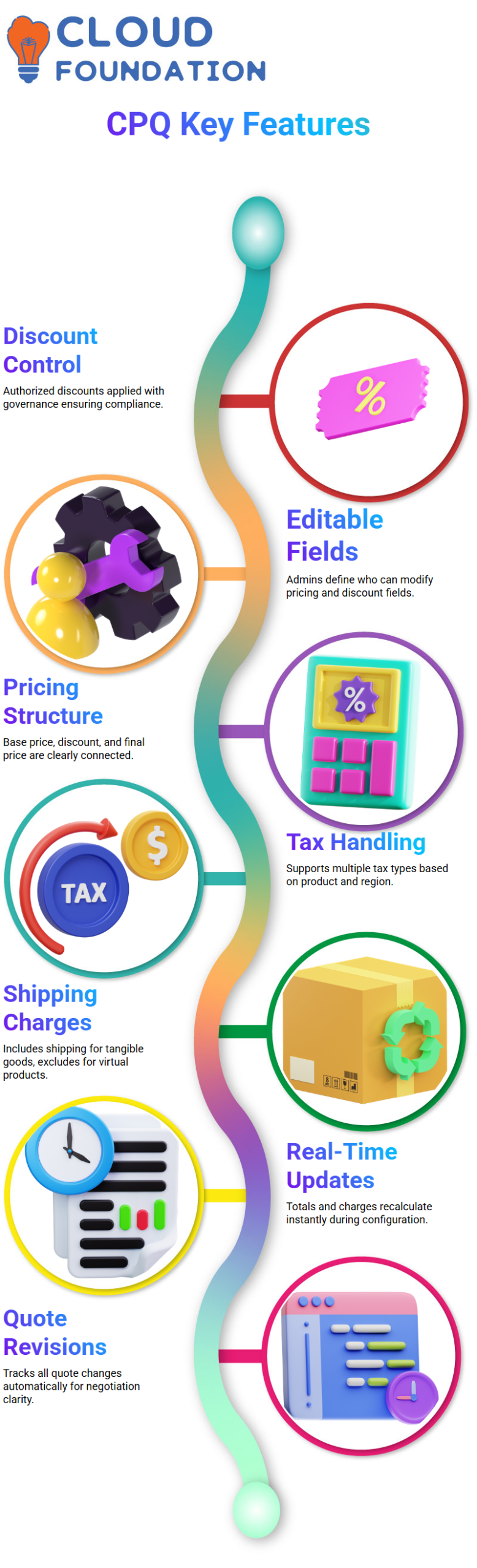
Discount management is a strong feature in SAP CPQ that I often highlight. A sales manager may provide discounts in SAP CPQ up to a predetermined level, such as three to ten per cent. I like demonstrating how SAP CPQ maintains flexibility during client discussions while enforcing governance.
I go over price calculation settings and cart field administration to make discount fields editable in SAP CPQ. Administrators have complete control over who may modify what SAP CPQ. In order to allow sales managers to apply authorised discounts directly in SAP CPQ without violating price regulations, I manually modify these parameters.
A comprehensive perspective of pricing processes is provided by SAP CPQ. I describe the relationship between several parts, such as base price, discount, and final price. Learners get an of how corporate pricing models function when they encounter this structure in SAP CPQ.
Handling Taxes and Shipping with SAP CPQ
Multiple tax components, including state, federal, and VAT taxes, are supported by SAP CPQ. I clarify that SAP CPQ determines taxes according to product type and area, which is essential for multinational corporations.
When dealing with tangible goods, SAP CPQ allows shipping charges to be included either individually or in the product’s package. SAP CPQ handles virtual deployments differently, with no shipping charges, as I usually make clear. Businesses are able to prevent human mistakes because of SAP CPQ’s versatility.
All of these components are combined in real time by SAP CPQ. Instantaneously, SAP CPQ recalculates totals and displays updated NRC and MRC values as I input replies and settings. Learning to trust the system is aided by seeing SAP CPQ react in real time.
Quote Revisions and Lifecycle in SAP CPQ
Quote revision management in SAP CPQ is one of my favourite aspects to describe. All changes made to a quote are automatically tracked by SAP CPQ. In order to facilitate back and forth during discussions, I demonstrate how SAP CPQ preserves revision history.
Every quotation in SAP CPQ has a status, creation date, update date, and effective date. I highlight how SAP CPQ maintains organisation without the need for human tracking. This is particularly useful when clients haggle over prices many times.

SAP CPQ Course Price

Nishitha
Author